

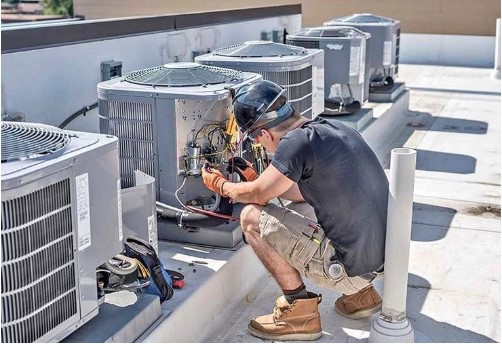
Temperature control plays a critical role in modern business facilities. Offices, warehouses, and industrial plants all depend on stable indoor climates to protect equipment, maintain productivity, and ensure worker comfort. Even small fluctuations in temperature can affect operational efficiency and energy consumption. As businesses scale, traditional cooling methods often fall short. That is where structured temperature control strategies come in, combining mechanical systems, smart monitoring, and energy optimization to maintain balance throughout the facility.
Temperature Control Foundations In Business Facilities
Every business facility starts with a basic need: consistent indoor climate regulation. Heat loads vary throughout the day due to machines, lighting, and occupancy levels. Without proper control, spaces become inefficient and uncomfortable. Modern systems rely on centralized cooling, zoning, and real-time monitoring to stabilize conditions. Good planning also reduces energy waste and extends equipment life.
Industrial Chillers For Stable Facility Cooling Systems
Industrial chillers are heavy-duty cooling systems designed to remove heat from large commercial and industrial environments. They work by circulating chilled liquid through heat exchangers to absorb excess thermal energy. This makes them ideal for factories, data centers, and production units where heat generation is continuous. Their scalability allows businesses to adjust capacity based on demand. Efficient operation reduces downtime and improves process reliability. In large facilities, industrial chillers become the backbone of consistent thermal regulation.
Energy Efficiency With Industrial Chillers In Large Spaces
Energy management is a key concern for businesses running large cooling systems. Industrial chillers help optimize energy use through variable speed compressors and smart load balancing. Instead of running at full capacity all the time, they adjust output based on real-time temperature data. This reduces electricity costs and prevents unnecessary wear. Regular maintenance also improves performance and efficiency.
Senville Air Conditioner For Commercial Comfort Zones
Senville air conditioner units are widely used in commercial environments where flexible and targeted cooling is needed. These systems are known for their ductless design and efficient inverter technology. They are ideal for offices, retail spaces, and small business facilities that require zone-based temperature control. Installation is simpler compared to large centralized systems, making them a practical choice for growing businesses. They also offer quiet operation, which improves workplace comfort. In many modern setups, The senville air conditioner solutions help maintain balanced indoor environments.
Smart Climate Management Using Senville Air Conditioner Units
Modern businesses are increasingly adopting smart climate control systems, and Senville air conditioner units fit well into this approach. With programmable settings and remote control access, they allow managers to adjust temperatures based on occupancy patterns. This reduces unnecessary energy use during off-hours. Integration with smart thermostats improves precision and responsiveness. The result is a more adaptive environment that supports both comfort and efficiency. These systems are especially useful in multi-room commercial layouts where flexibility matters.
Smart Sensors And Automation In Temperature Control Strategies
Automation is transforming how businesses manage indoor climates. Smart sensors track temperature, humidity, and occupancy in real time. This data is used to automatically adjust cooling systems for maximum efficiency. Predictive algorithms can even anticipate heat spikes and respond proactively. Such systems reduce human error and improve energy savings. Over time, automation creates a self-regulating environment that adapts to operational needs without constant manual input.
Conclusion
Effective temperature control strategies are essential for modern business facilities. From large-scale industrial chillers to flexible Senville air conditioner systems, each solution plays a specific role in maintaining balance. When combined with smart sensors and automation, these technologies create efficient, reliable, and cost-effective environments that support long-term business performance.